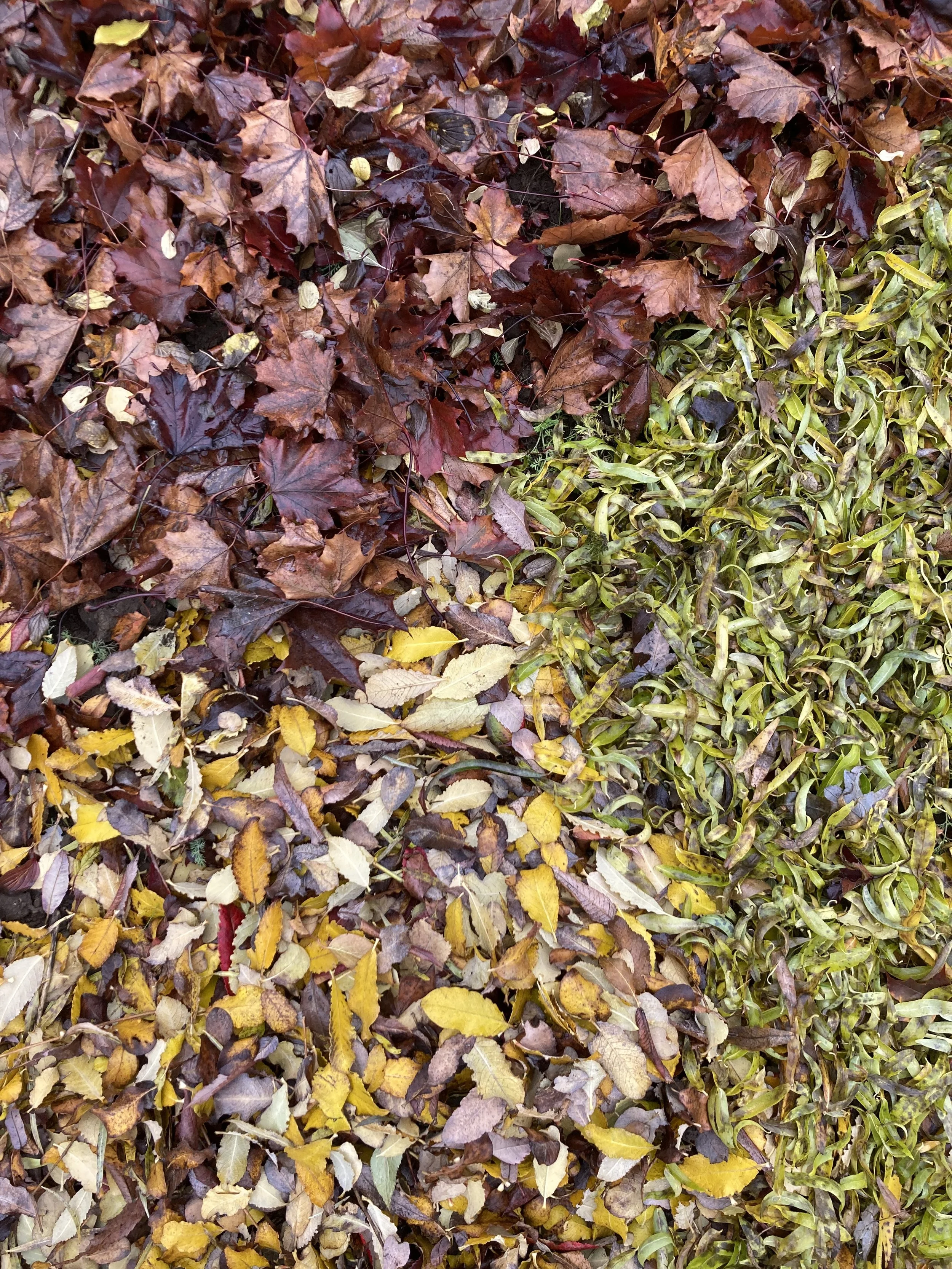
As fall slowly slips into winter the glorious colors of fall days make their descent to the earth, carpeting the ground in the various colors and textures of leaves. Many people rake and blow these beauties into trash bags and remove them from their property. Some HOAs even require you to remove your leaves. Have you stopped and thought about why? Or what happens without our intervention in a natural system? Perhaps those leaves serve a purpose beyond photosynthesizing or shading out competition. And yes they sure do. The leaf layer is where many insects and vertebrates overwinter, including moths, butterflies, native bees, and salamanders. Fallen leaves are also an important way to fertilize the plant they came from and build soil. Have you ever dug under an area with a thick leaf layer? The soil is incredible and full of life! We are lead to
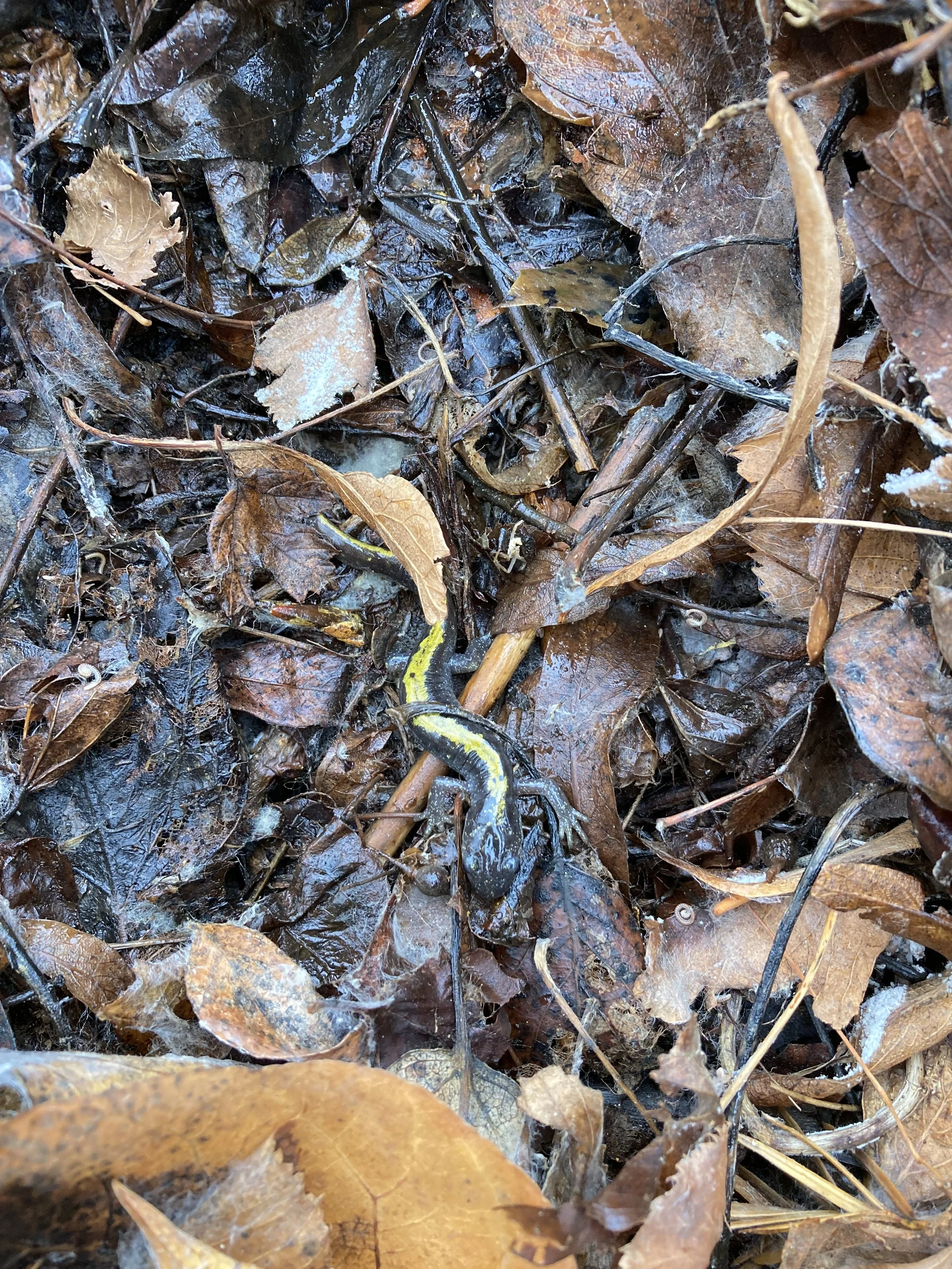
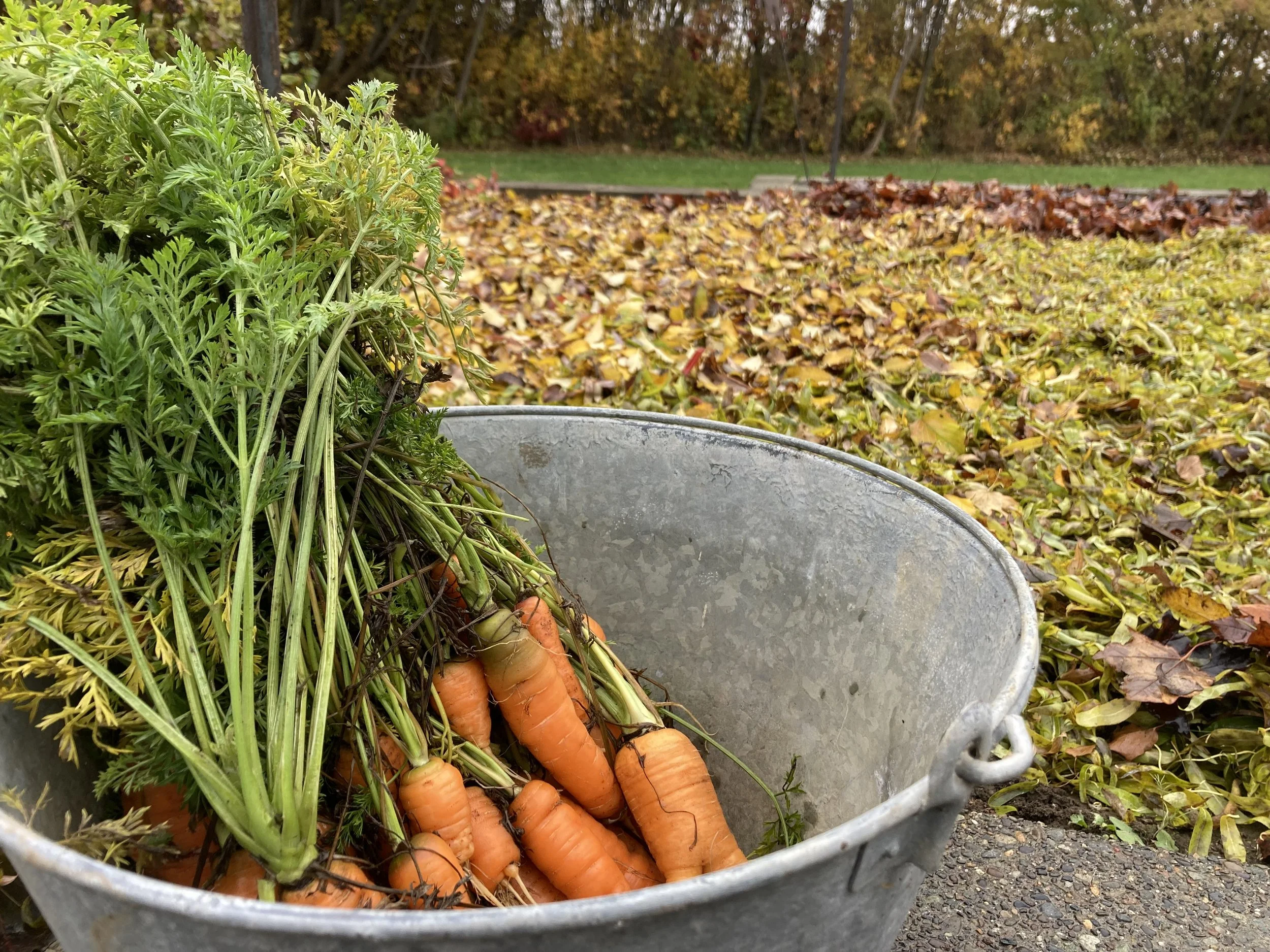
believe fall ‘clean up’ means removing all debris, including the leaves. I would like to suggest a phrase change, one that I am working to embody in my work. Instead of cleaning up, let’s just ‘put the garden to bed’ in the winter. This way we can think of the dormant season as a season of rest, both for the garden and for us gardeners. We can use the leaves as the blanket to help insulate and protect the plants and critters overwintering in our gardens. So what does this actually look like? Leaves on a driveway can be raked or blown to garden beds as mulch. You can place the leaves around trees and shrubs, avoiding contact with tree trunks, and you can create a layer over your vegetable beds. Lawns can easily handle an inch or two of leaves, if you have more than that move them to your garden beds. If you have rock mulched beds, you will unfortunately want to remove the leaves from them, or better yet, remove the rocks and start using leaves! If you still have extra leaves put them into a four sided ‘cage’ and let them decompose over time to make beautiful compost.
Avoid shredding leaves with a mower as this also shreds the critters trying to use them. And remember you may never see who’s using your leaves, but they are there. You can still make things look tidy by clearing edges, sweeping side walks, and removing leaves from gravel. The goal is just not to remove the leaves from the site, and keep them in a layer no more than six compacted inches on the soil. Come spring just leave the leaves where you left them in the fall, they will decompose and all those nutrients and organic matter will benefit your soil.
Leaves are habitat!
-Jamie