The Cummins side of my family has been growing apples as a livelihood since 1844, starting in southern Illinois, which makes me the seventh generation involved in the care of fruit trees. My great uncle Jim, James N. Cummins helped breed and develop the Geneva® rootstock at the Cornell Geneva Extension in Geneva, New York, transforming orchards world wide. He was a legend, and only recently passed away this year at 101 years of age. I grew up hearing stories about Uncle Jim, Cousin James, whom I am named after, Cousin Stephen and many other family members my dad grew up with in Illinois. It wasn’t until my early twenties that I got to immerse myself in the world of orchards and nurseries. I spent a year at my cousin Stephen’s orchard and nursery, Cummins Nursery, in Ithaca, New York. It was here that I really felt the pull to apples and apple culture that runs deep within me. It’s where I learned various forms of grafting and pruning, where I got to taste the full potential of apples, and where I realized I would always have apples in my life, it’s in my blood. That year is Ithaca is what ultimately lead to JC Pruning and Gardening, which started as pruning jobs on the side.
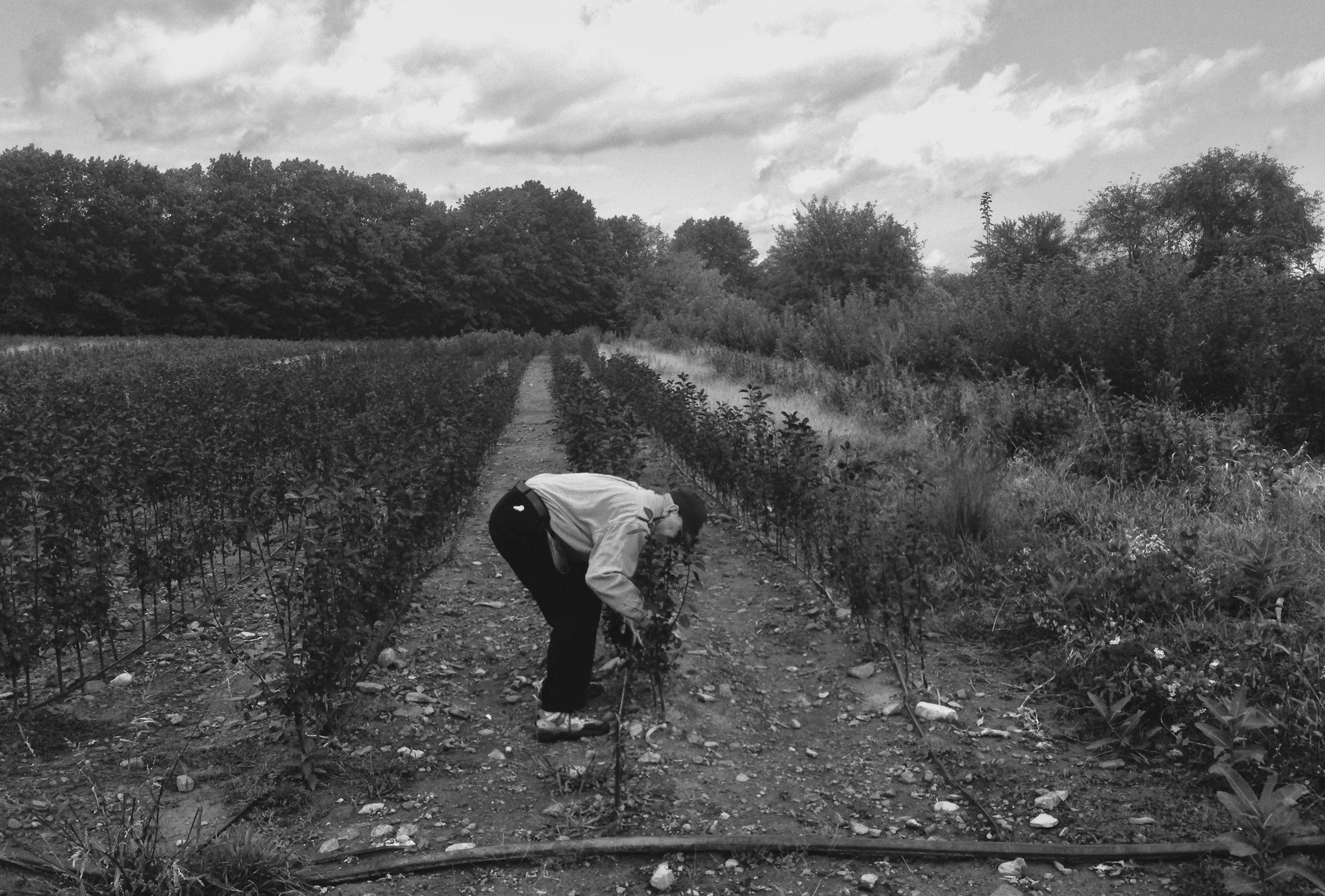
Uncle Jim at 91 out in the nursery in Ithaca, New York
The apples that I was most smitten with were the unique heirlooms, often seedlings from the 1800, either originating in the United States or carried over from Europe. In the northeast United States apple culture is embedded in the land. Small orchards and cideries are everywhere, growing heirloom and cider specific varieties. While Washington State is the apple capital North America, it has always been for large commercial production. Once the Columbia river was damned and there was a source of irrigation water, central and eastern Washington became huge producers of commercial grocery store apples. With large swaths of land, sun, and access to irrigation it was the perfect location. The low population did not support profitable niche apple production initially. There have of course been small orchards growing heirlooms and unique to the area varieties, check out the the Lost Apple Project for instance. However, the northeast boasts an abundance of what I experienced as apple culture in a way I feel lacking in Washington, my home state. So let me introduce you to some amazing heirloom varieties you can grow and eventually share the harvests with friends and family.
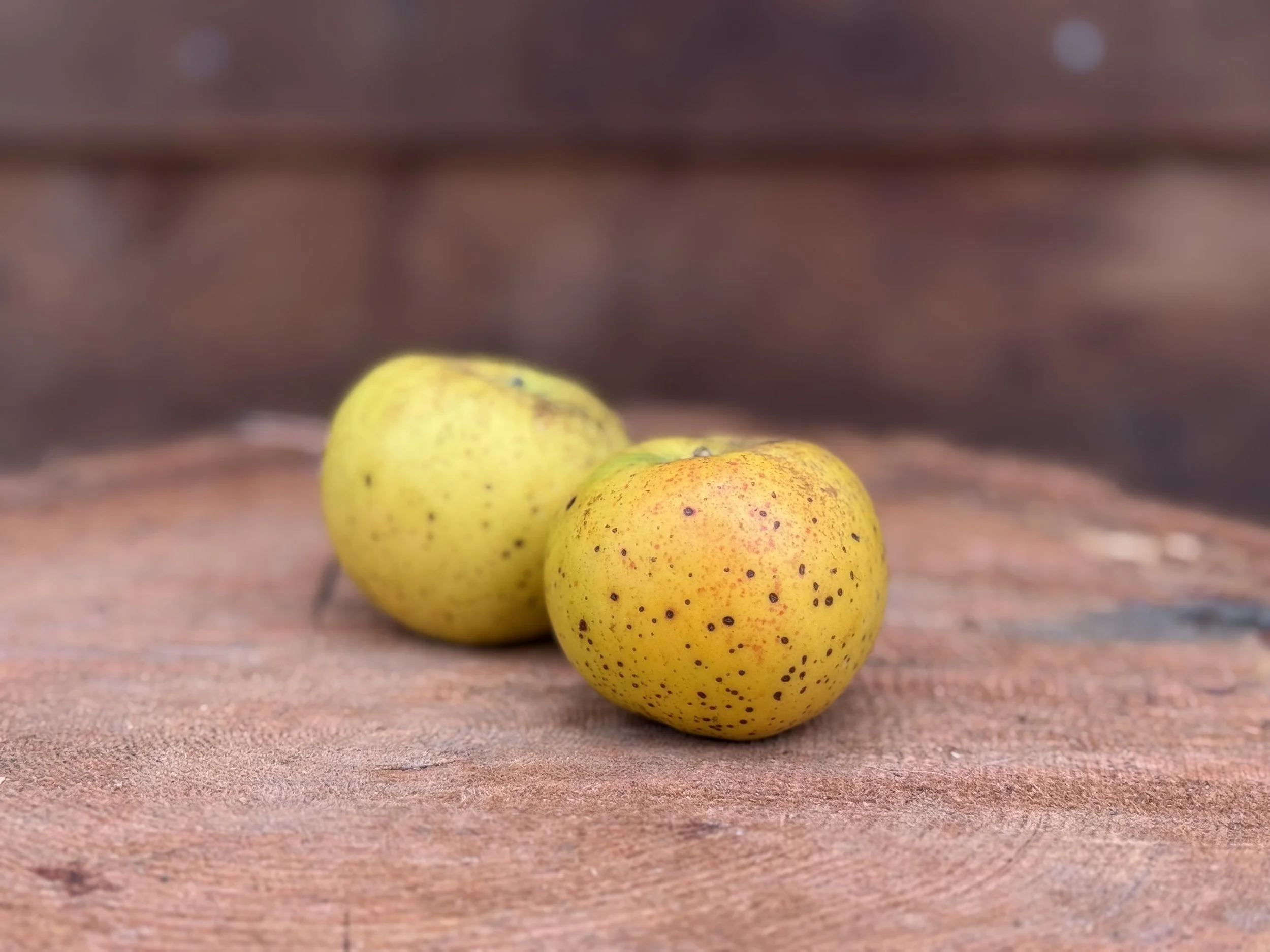
Golden Russet (picture above)
My favorite apple variety. Originating from upstate New York in the 1840s as a seedling. It’s dense flesh breaks way to flavors of pear, rich honey, and just the right amount of tart to blend it all beautifully together. As Rowan Jacobsen says in Apples of Uncommon Character, “The apple does everything better than most apples do anything.” John Bunker of Fedco Trees calls it “the Champagne of cider apples” for the superior single variety hard cider it makes. Golden Russet is also an excellent keeper. Not out on the counter, but in a basement, garage root cellar, mudroom, or any cooler space that doesn’t freeze. It makes a deliciously rich apple crisp and bakes well with savory meals. But honestly, I just want to eat them all fresh.
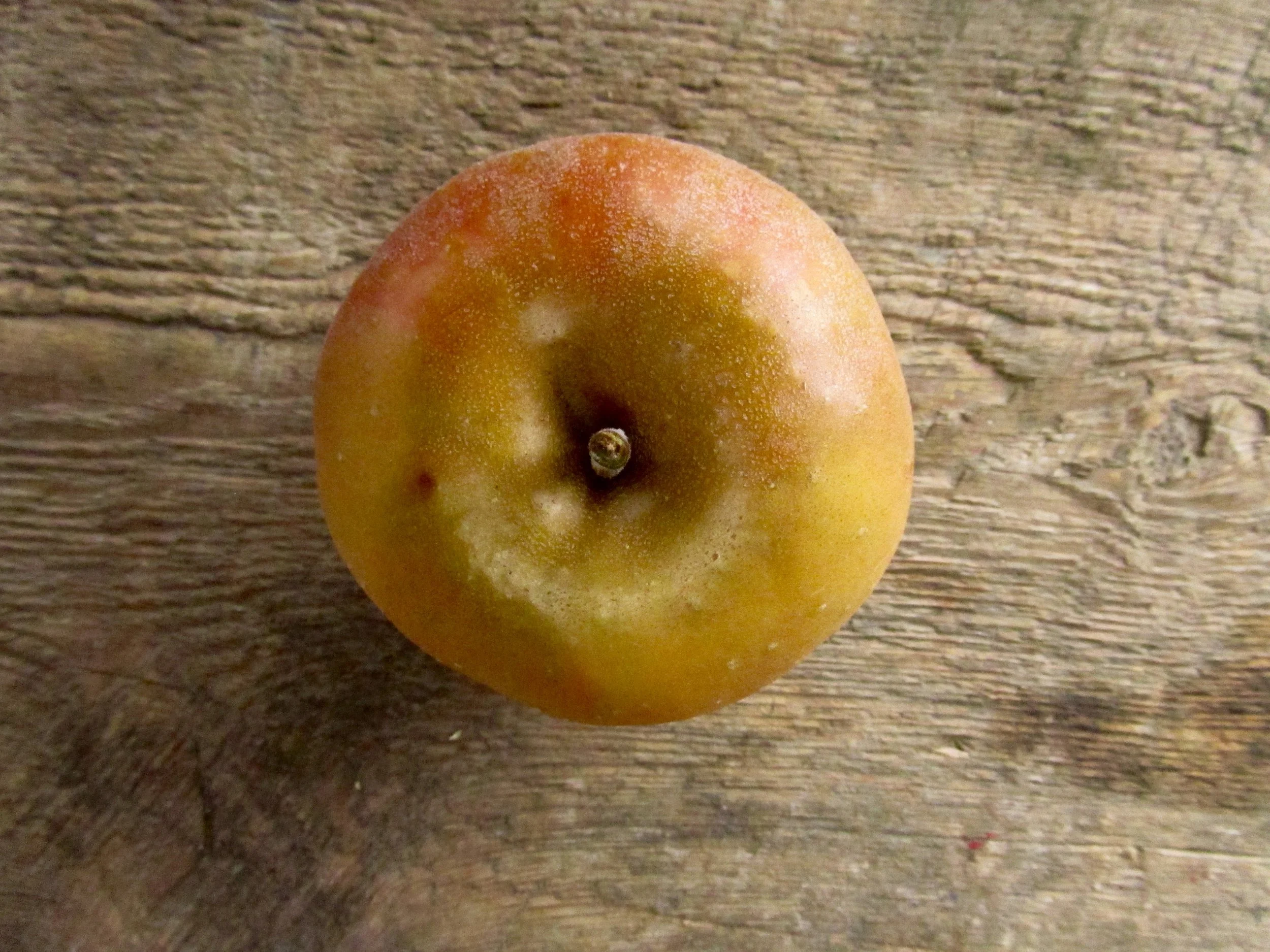
Ashmead’s Kernel
Originated in Gloucester, England in the early 1700s as a seedling. It came to the United States in the 1700s and thrived in the harsh climates, where other English varieties did not. A wonderful keeper that’s intense sweetness and gum souring acidity are best enjoyed after a month or so of storage. Straight off the tree the acidity overwhelms the palate. But once stored the honeyed nuttiness really comes through. It blends wonderfully for hard cider and bakes well into pies and tarts. An all around wonderful apple.
Belle de Boskoop
Originiated in Boskoop Holland in 1856. It is a well renowned Dutch apple. I have only tasted it once and was so smitten with it that I grafted one for myself and my parents. Sadly ours has yet to bear as it has faced several difficulties such as breakage from snow, voles, and our generally pore soil, but when it does…apparently it makes the best strudel. Belle de Boskoop bakes well for pies and cakes and can be used in hard cider blends. Another keeper, it’s acidity mellows in storage to become a very well flavored complex apple.
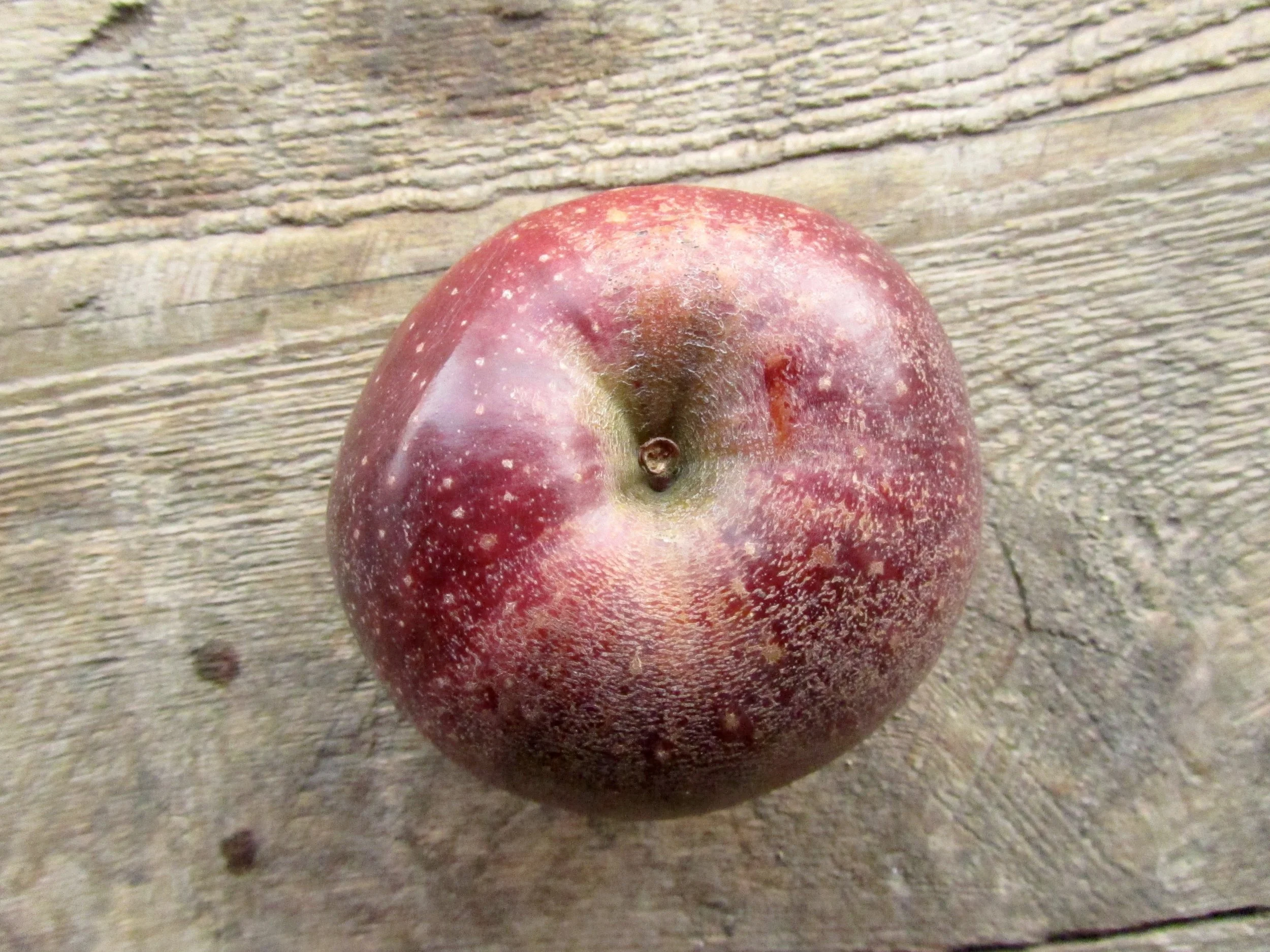
Black Oxford (pictured above)
Originated in Paris, Oxford County, Maine, around 1790. This unique apple was all but forgotten when John Bunker was introduced to it in 1979, with his help it has seen a comeback in Maine, though it’s still not well known elsewhere. A true storage apple. Best to start eating this one in late November, then you can continue enjoying it till early spring! It’s dark purple skin is flecked with white lenticels, giving it the appearance of the night sky. Underneath the skin is green. Sweet and rich, it will be green inside if eaten too early. Store it to let the grassiness fade and the true nature of Oxford Black blossom. If baked into a sauce the purple skin will tinge the sauce pink. The thing I like most about this apple is it’s uniqueness, which in by book is worth a spot in the orchard.
Cox’s Orange Pippin
Originating in Colnbrook, England in 1825 this little wonder defies what it means to be an apple in flavor. An earlier ripening variety, ready to pick and eat off the tree in September but can be stored for up to a month where the acidity subsides. It has a tropical hint, is crisp and tender and the perfect size for a small apple snack. It can be used for pie or sauce, but shines best out of hand.
Karmijn de Sonnaville
Breed by Wageningen University in the Netherlands in 1949, a seedling of Cox’s Orange Pippin. Strongly acidic, it stores well where its acidity mellows. It makes an outstanding crisp as well as fresh cider. Another one I have only had once, but it made my list of apples to grow.
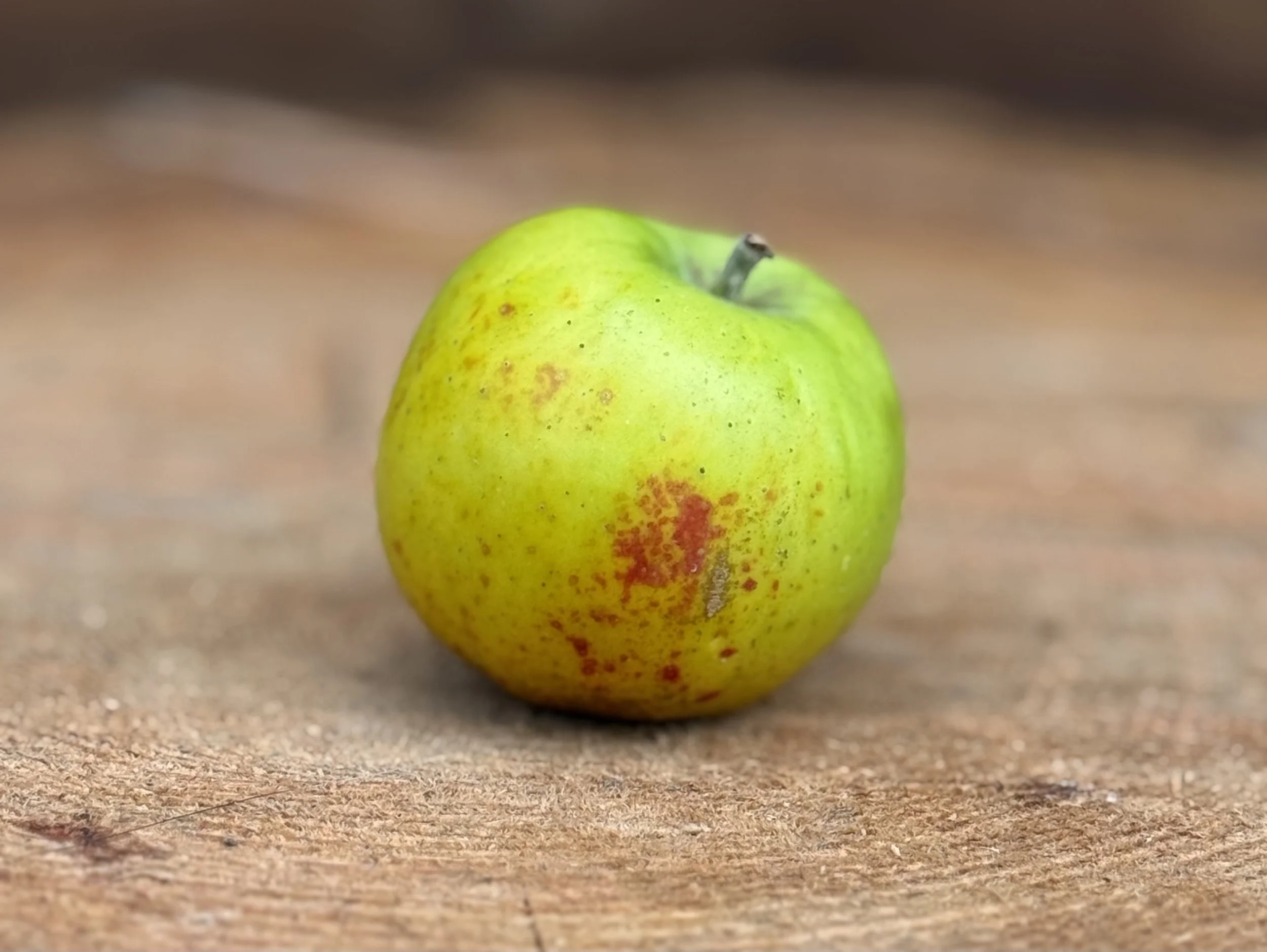
Pomme Grise (pictured above)
Originated in Montreal, St. Lawrence River Valley area, Quebec in the 1800s probably as a chance seedling. One of my favorite varieties. It is a true northern apple, not developing its best flavor in mild climates. A small little apple boasting tart nuttiness described by Rowan Jacobsen as “marzipan richness.” It’s best eaten fresh, but will keep for a couple months.
I am attracted to heirloom apples because I of their diverse and often amazing tastes, their broad scope of uses, and their rich history. The thing to understand about apples is that the only way to replicate an apple variety is by grafting. Seeds do not come true to the apple you took them from. So if there is only one tree left of a single variety the only way to see that variety on into the future is to take a small one year twig and splice it onto an existing tree or rootstock. Thousands of apple varieties have been lost. We will never get those back. It is up to us to keep the ones we have in cultivation. One of the incredible things about heirloom apples is all of their uses. There are apples that make the best pie if you want an apple to hold it’s shape, or ones that mush down for a British style apple pie, or ones that pair well cooked with meat, or all the amazing pairings you could make with cheeses, or the ones that store until spring. And then there are the cider apples, most you can’t eat fresh out of hand, but make the most amazing hard ciders when an artful cider maker knows how to blend them. If you feel like treating yourself to some hard cider you can mail order it from Eve’s Cidery. A cidery in Van Etten NY, where two of the hardest working people I know make the most incredible cider. But to get a taste of some truly amazing heirloom apples, you’ll just have to grow them yourselves. Continue to this post to find resources for fruit trees.
-Jamie